
My smallest students are always very curious to see what I carry in all the different pockets of my case, and they often want to be sure they are as “up-to-date” as their teacher when it comes to their EDC (every day carry). I try to keep it basic, functional, and affordable. So let’s take a look in my case!
As an Amazon Associate I receive commission from links to Amazon on this page. I may receive commission from other links as well.
1. A Great Pencil
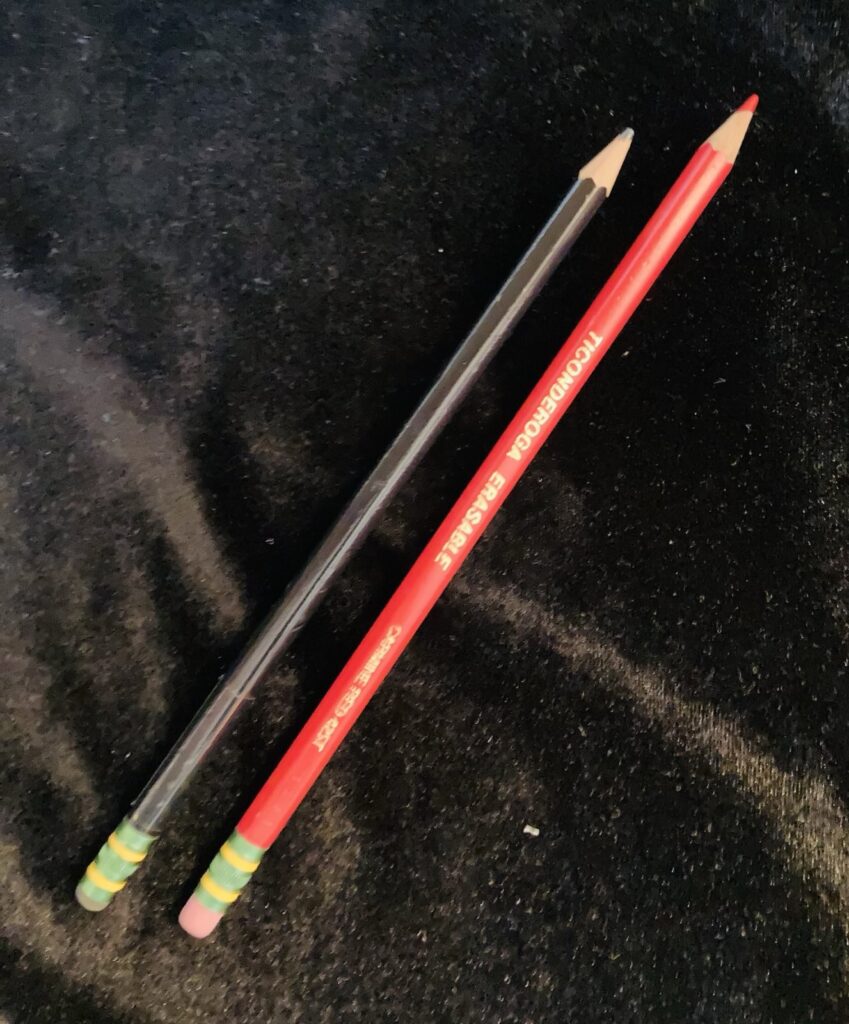
How many times as an youth orchestra director would I ask for a show of pencils and only a few students had one? Sigh! Also, how many times as players have we finally figured out a good bowing or fingering and then forgot it by the next practice session because we didn’t have a pencil handy? Sigh again…
My go-to pencils are the Black Wood-cased Ticonderoga #2 HB pencils.
Pros:
- smooth writing, does not scratch or puncture the sheet music
- dark, clear pencil markings (better in my opinion than mechanical pencils)
- a reliable eraser that will not smudge the music, even after multiple uses on the same location
- lead does not break easily
Cons:
- must be sharpened using a pencil sharpener, lacks the convenience of a mechanical pencil
- when the lead is dull, markings are less clear
AND…the Ticonderoga Erasable Checking Pencils in RED
Pros:
- smooth writing, does not scratch or puncture the sheet music
- ability to erase RED pencil
- red lead allows you to highlight markings in the music that perhaps have ceased to catch your or your students attention
- lead does not break easily
Cons:
- erases fairly well, but is not perfect
Black Wood-cased Ticonderoga #2 HB pencils
Click link to see price. Paid link.
Ticonderoga Erasable Checking Pencils (RED)
Click link to see price. Paid link.
Want a sleek pencil sharpener to keep in your case as well? Check out the Blackwing One-Step Long Point Pencil Sharpener.
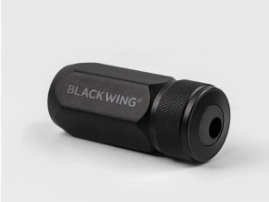
Blackwing One-Step Long Point Pencil Sharpener
Click link to see price. Paid link.
2. Mutes
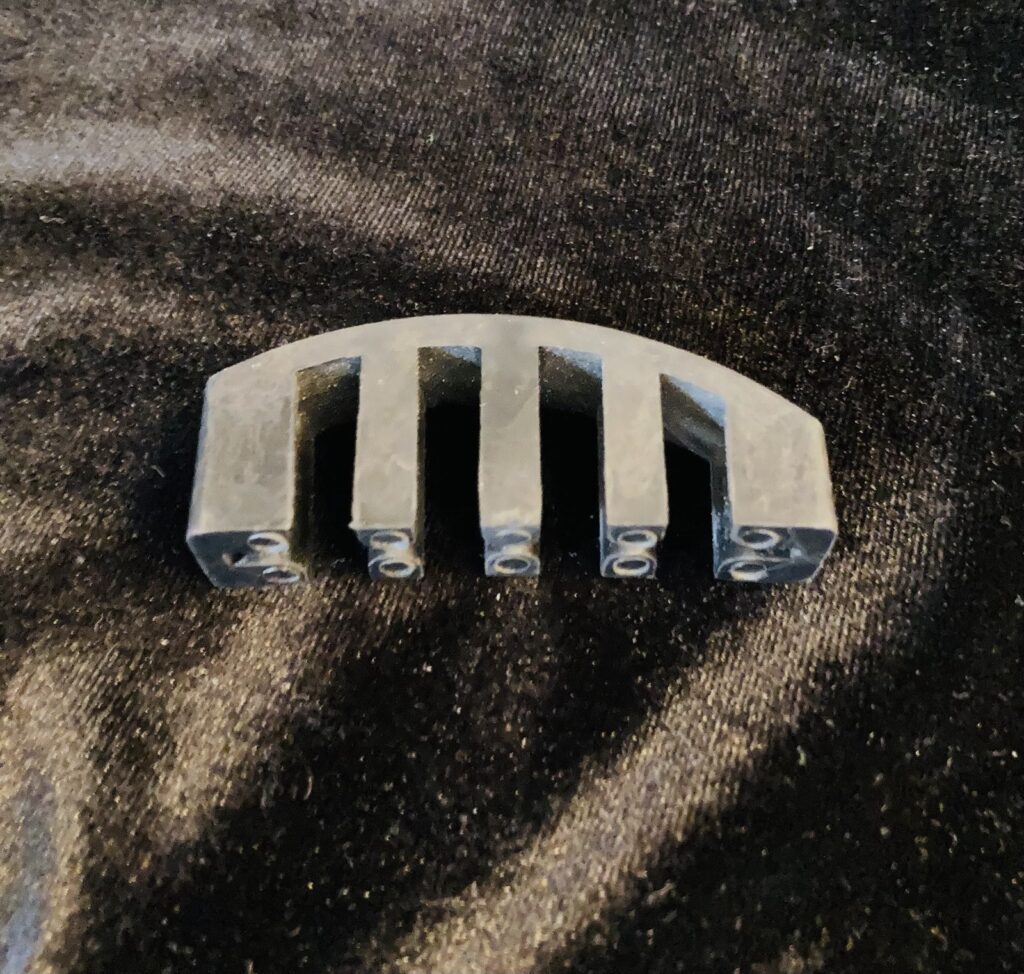
I keep two kinds of mutes in my case: a practice mute and a performance mute.
I like the simple rubber practice mute: Fiddlerman Rubber Violin Practice Mute
Pros:
- simple, quick to take on and off
- sturdy
- affordable
Cons:
- does not give the same clarity as you might get with a metal mute
For when I need a mute for performing, I also keep it simple with a rubber Tourte style mute. I like to pick up several extras to keep in my case to hand out to my students if needed.
Pros:
- simple, quick to take on and off
- affordable and easy to replace
Cons:
- not the most refined sound, but does its job
- can leave a black rubber mark on the bridge
Fiddlerman Rubber Violin Practice Mute
Click link to see price. Paid link.
Tourte style rubber violin mute (6 pack)
Click link to see price. Paid link.
3. Tuning fork
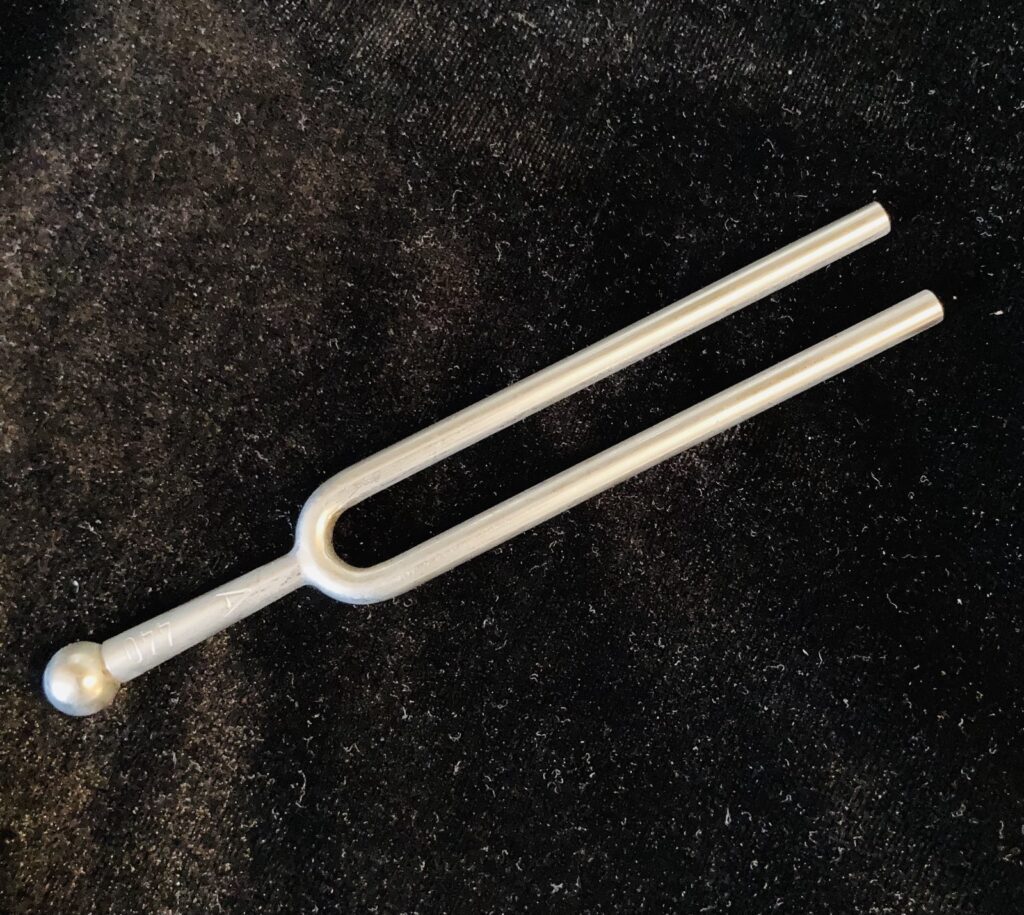
I carry both a digital tuner and a tuning fork. I like having both options myself, introducing both options to my students, and refining my students’ ears with the tuning fork. Like many other things in my case, I like to keep it functional and affordable.
Wittner Tuning Fork – A440
Click link to see price. Paid link.
4. Digital tuner
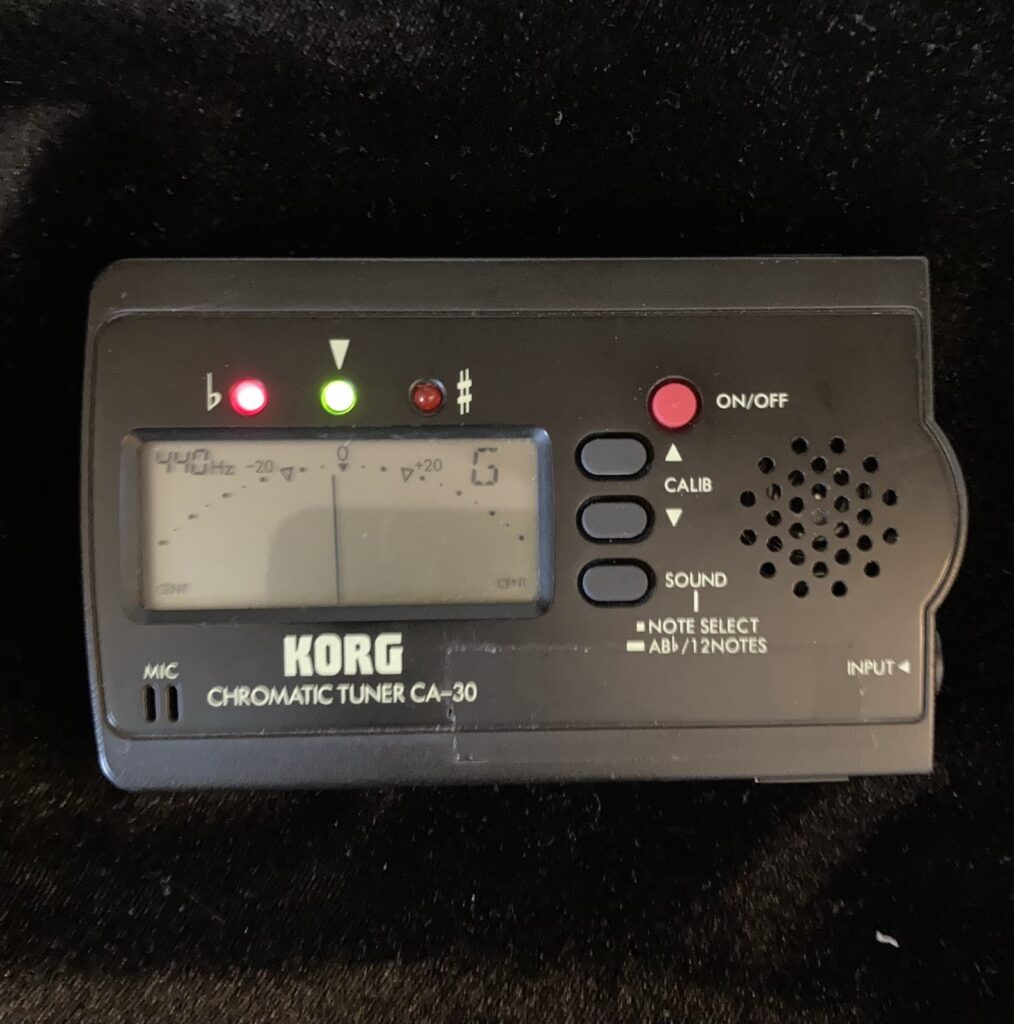
In addition to my tuning fork, I also carry a digital tuner, the Korg CA-50. Mine is many years old and I got it in black. It now comes in a standard white color, but still the same great tuner. I recommend them to my students, and I think it is the BEST tuner out there. While I do not have the metronome version, some of my students have gotten it and it works great. I don’t currently carry the pick-up contact mic add-on, but I have in the past and can recommend it.
Pros:
- Simple, easy to use, reliable
- Better pickup than a cell phone, depending on the environment
- Optional add-on: Pick-up contact microphone (great for when you are in a noisy room with lots of other instruments playing)
- Option with metronome, louder than a cell phone speaker
- very durable
Cons:
- Can be redundant if you use a cell phone apps for metronome/tuner
KORG CA-50 Digital Tuner
Click link to see price. Paid link.
KORG TM-70T Tuner and Metronome
Click link to see price. Paid link.
KORG CM200BK Clip-on Contact microphone
Click link to see price. Paid link.
5. Shoulder Rest
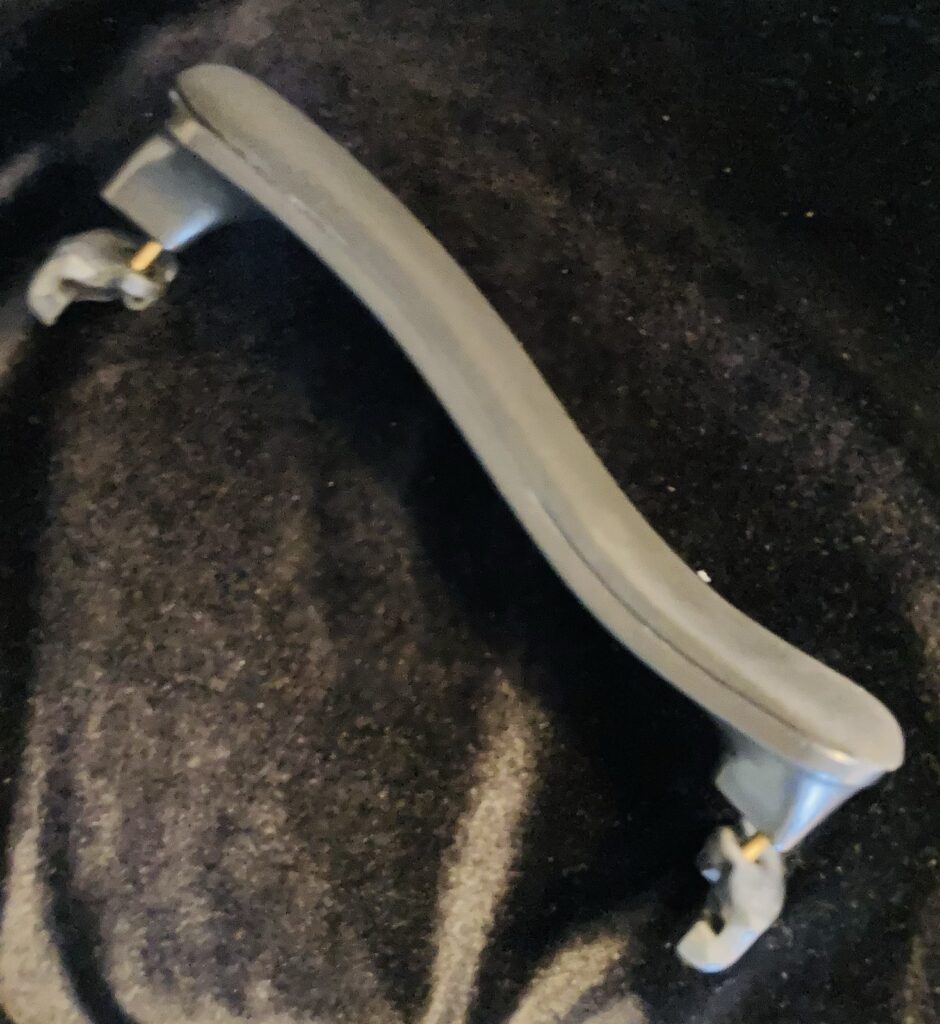
Certainly, there are many options for shoulder rests and everyone should find one that best fits their body. However, I have found that the Everest EZ shoulder rest works quite well for nearly all of my students, including my viola students. It is what I use and what I recommend my students try first.
Pros:
- natural comfort and stability
- lightweight
- the cushion, while thick and comfortable, is not squishy and compensates for slight differences in neck length and shoulder structure
- affordable
Cons:
- after lots of use, the cushion can come unglued from the rest of the shoulder rest
- can be challenging to fit into smaller cases (the foldable model can solve this problem)
Everest EZ violin shoulder rest
Click on link to see price. Paid link.
Everest Foldable violin shoulder rest
Click on link to see price. Paid link.
Everest EZ viola shoulder rest
Click on link to see price. Paid link.
Everest Foldable viola shoulder rest
Click on link to see price. Paid link.
6. Rosin
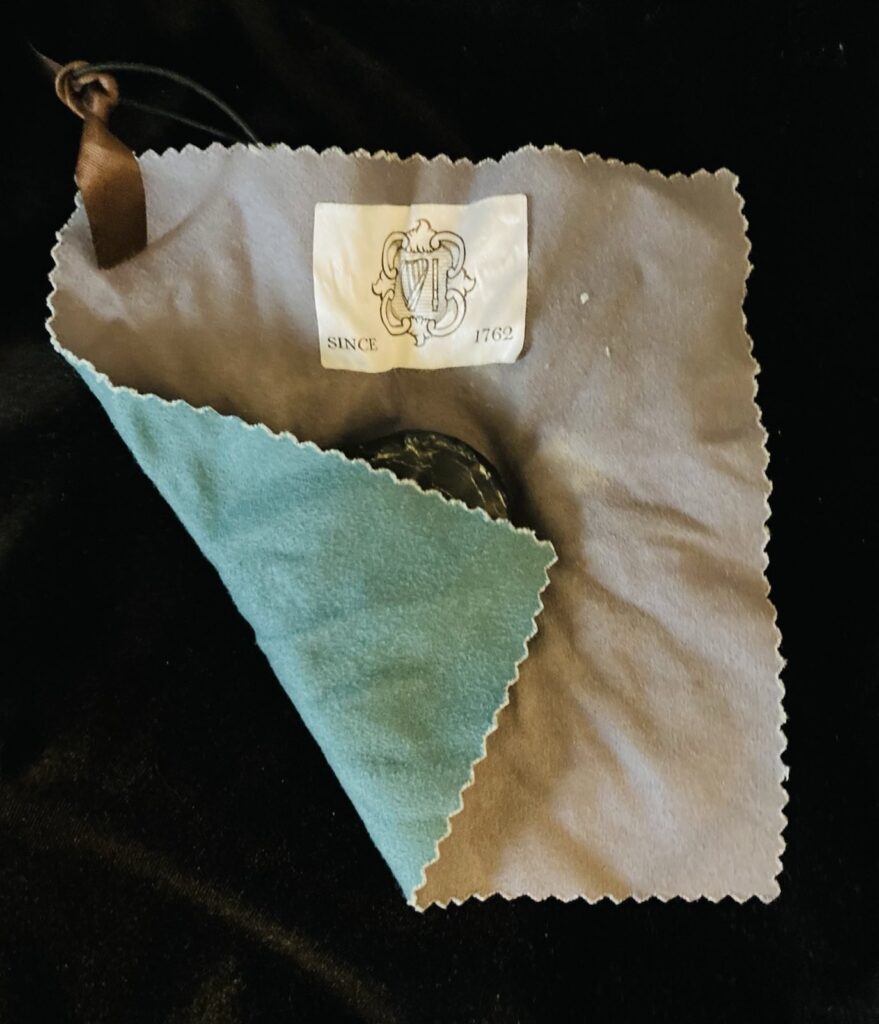
There are lots of wonderful brands of rosin to choose from, but after trying a number of different brands, I generally recommend W.E. Hill and Sons dark rosin for most of my students. I recommend W.E. Hill and Sons light rosin for my viola students.
Pros:
- gives a nice grip to the bow for beginner and intermediate students
- not too dusty
- does not break easily
- afforadable
Cons:
- Not as refined as some others I have tried, but still does a great job
- Sometimes a bit too sticky
W.E. Hill and Sons (dark) rosin
Click on link to see price. Paid link.
W.E. Hill and Sons (light) rosin
Click on link to see price. Paid link.
7. Peg Compound
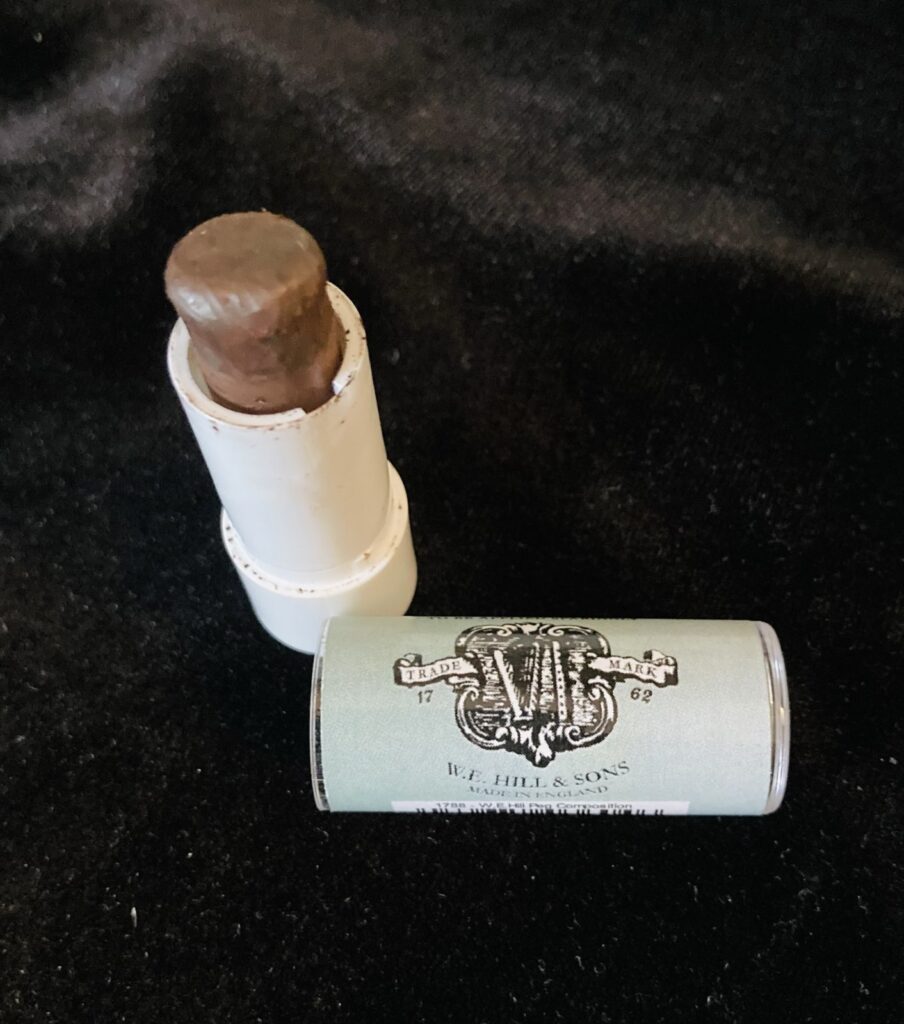
I find that having peg compound in my case is very important, especially as a teacher. Slipping pegs can take up a great deal of time and cause lots of frustration for young students. I use W.E. Hill and Sons peg compound. I think one stick will last my entire career!
Pros: does the job!
Cons: none!
W.E. Hill and Sons peg compound
Click on link to see price. Paid link.
8. Chin rest key
Another tool that I find especially useful as a teacher is a chin rest adjuster. Sometimes chin rests come loose and it is very handy to have one in your case. (Useful hint: you can also just use an unfolded bobby pin if it has safety tips on it)
Chin rest key
Click on link to see price. Paid link.
9. Back up strings
There are many choices for violin and viola strings on the market, but they are not all created equal. When it comes to instrument strings, you truly do get what you pay for. Cheap strings will generally sound cheap and will not last as long as more expensive brands. I always recommend for my students to purchase Thomastik Dominant String set with a ball steel E string. That being said, if affordability is really an issue, my students have used the Thomastik Alphayue String set.
Thomastik Dominant Strings
Pros:
- responsive but not overly sensitive
- warm resonant tone
- even response and sound across all four strings
- Mid-range pricing
Cons:
- steel E can be a bit strident sounding (you can change to the wound E or Lenzer Goldbrokat E if needed)
Thomastik Alphayue Strings
Pros:
- warm resonant tone
- even response across all four strings
- affordable
Cons:
- not as responsive as Dominants
- not very durable
Thomastik Dominant Violin String Set (steel ball E)
Click on link to see price. Paid link.
Thomastik Dominant Violin String Set (with aluminum wound ball E)
Click on link to see price. Paid link.
Thomastik Dominant Violin String Set (with Goldbrokat Lenzer E)
Click on link to see price. Paid link.
Thomastik Dominant Viola String Set
Click on link to see price. Paid link
Thomastik Alphayue Violin String Set
Click on link to see price. Paid link.
10. Cleaner, cleaning cloth, and polish
It is very important to clean and maintain your instrument, not only for looks, but also to continue to get the best sound from the instrument. Rosin caked onto the wood can dampen the sound. After every practice/performance, I use a soft cloth to wipe down the strings, the fingerboard and the varnished wood under the strings. However, every few months it can be helpful to do a more intensive maintenance cleaning with a cleaner and polish. I am very careful which products I use as it is very easy to damage the instrument’s varnish. It is important to use string instrument specific cleaners and polishes.
Any new product I use, I test first in an inconspicuous area of the instrument as even the varnishes of different instruments can react differently to the same product. Below is linked the cleaner/polish set and cloth that I currently use and have found to work very well on my antique instrument. If in doubt, however, check with your local luthier or you can pay the luthier to give your instrument a professional cleaning and polish.
Shar Violin Cleaning Kit
Click link to see price. Paid link.